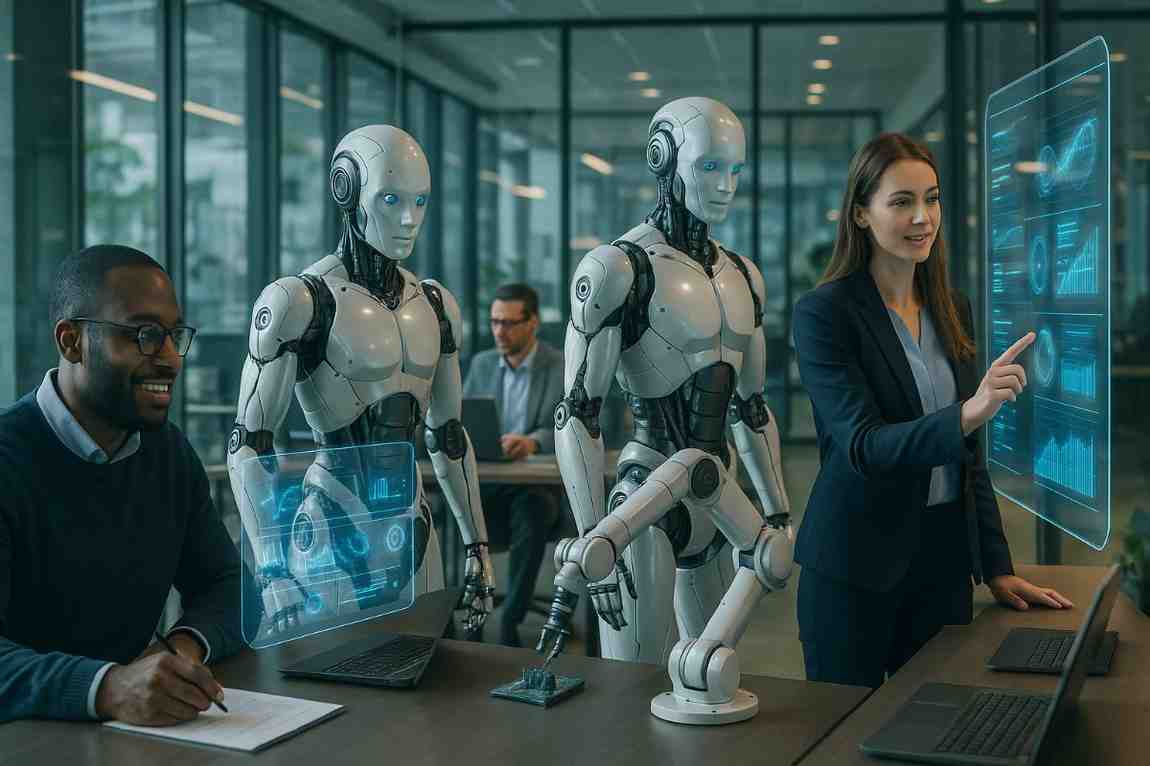
Automation is transforming the modern workplace at an unprecedented pace. From robotic arms on factory floors to AI-driven customer service and self-learning algorithms in finance, technology is reshaping how work gets done. Yet, with innovation comes debate: will automation replace human workers, or will it empower them to reach new heights of creativity and productivity?
This article explores the evolution of automation, its current impact on industries, the challenges it presents, and how humans and robots can coexist in the future of work.
1. The Evolution of Workplace Automation
Automation has been evolving for centuries. The Industrial Revolution marked the first major shift—machines began to take over manual tasks, increasing production and efficiency. The 20th century brought assembly lines and programmable logic controllers, changing how industries operated. Today, we are witnessing the third wave of automation, powered by artificial intelligence (AI), robotics, and machine learning.
Unlike earlier machines that could only perform repetitive tasks, modern systems can analyze data, learn from experience, and make decisions. This has blurred the line between human and machine capabilities, leading to smarter workplaces and more complex questions about the future of labor.
2. How Automation Is Transforming Industries
- Manufacturing: Robots now handle welding, painting, packaging, and assembly. Smart factories integrate IoT and AI to reduce waste and predict maintenance needs.
- Healthcare: AI helps diagnose diseases, robotic tools assist in surgeries, and automation reduces administrative burdens on healthcare staff.
- Retail and Logistics: Warehouses use robotic systems for sorting and shipping, while drones and autonomous vehicles redefine last-mile delivery.
- Finance: Automated trading and fraud detection systems analyze vast data instantly, while robotic process automation (RPA) simplifies back-office operations.
- Agriculture: Drones, sensors, and autonomous tractors make farming more efficient by optimizing irrigation, planting, and harvesting.
3. The Benefits of Automation
While concerns about job loss persist, automation brings undeniable benefits that can empower both workers and organizations.
- Increased Productivity: Machines work tirelessly, handling repetitive tasks and freeing humans to focus on strategy and creativity.
- Enhanced Safety: Automation takes over dangerous tasks in industries such as mining and construction, protecting human workers.
- Job Evolution: Although some jobs are replaced, new ones are created in programming, system management, and AI ethics.
- Quality and Precision: Automated systems reduce human error, improving consistency and product reliability.
4. The Challenges of Automation
Despite its advantages, automation presents social and economic challenges that must be addressed thoughtfully.
- Job Displacement: Repetitive and low-skill roles are most at risk, raising concerns about unemployment and inequality.
- Skill Gaps: The demand for tech-savvy workers is growing, making lifelong learning essential for career resilience.
- Ethical Concerns: As AI makes decisions in hiring, finance, and healthcare, ensuring fairness and accountability becomes vital.
- Economic Polarization: Without equitable policies, automation could widen the gap between high-tech and traditional sectors.
5. Collaboration Between Humans and Machines
The future of work lies not in competition but in collaboration. When humans and machines work together, the result is increased efficiency and innovation. Robots handle repetitive tasks, while humans provide emotional intelligence, creativity, and critical thinking.
Collaborative robots, or “cobots,” are designed to safely assist humans in workplaces—from assembly lines to hospitals. These cobots represent a shift toward partnership rather than replacement.
6. Preparing for an Automated Future
To thrive in an automated world, society must adapt through education, policy, and innovation. Governments should invest in reskilling programs, while businesses should embrace responsible automation that improves both productivity and employee well-being.
- Governments: Support retraining initiatives and establish ethical AI frameworks.
- Businesses: Integrate human creativity with machine precision and prioritize reskilling employees.
- Individuals: Focus on developing soft skills like empathy, adaptability, and problem-solving—areas where humans excel.
Conclusion: Empowerment, Not Replacement
Automation is not the end of human labor—it’s the evolution of it. Machines are redefining efficiency and accuracy, but human qualities like empathy, ethics, and creativity remain irreplaceable. The most successful workplaces of the future will be those that embrace collaboration between humans and technology.
Rather than fearing automation, we should view it as an opportunity to enhance our capabilities and reimagine what work can be. When used wisely, automation doesn’t replace humans—it empowers them.